SlyBob's Travel Guide to...
Liverpool

(For the Nerds)
Is Liverpool worth a visit?
A famous northern city of which everybody already knows everything about. Liverpool slowly reveals itself, however, to be much more, and the city is, quite frankly, fantastic!
What to see and do in Liverpool?
-
Liverpool's Cathedrals
Compare and contrast a couple of cathedrals. Anglican wins as the largest and most traditional, the largest in the UK, no less, while Roman Catholic wins as the most modern. That wasn't the plan, but at least they got the crypt finished.
-
Mersey Ferry
Take a ferry up and down rather than cross the Mersey. It might be a passenger service during peak hours, but outside of that it operates as a sightseeing cruise. Highlights include a huge warehouse and a ventilation shaft while Gerry and the Pacemakers play over a tinny tannoy.
-
Mathew (one 't') Street
Beat a retreat to Mathew (one 't') Street, the heart of Merseybeat past and present. The iconic Cavern Club, the 'Birthplace of the Beatles', dates back to... 1984! That's because of British Rail, by the way, an Off-Peak, Super Saver, Return Ticket to ride?
-
Royal Albert Dock
No longer open only at breakfast time, the formerly silted and deserted berths now reflect fleshpots, knick-knack providers, and museums of the Liverpool, Maritime, Beatles and British Music varieties. It just about includes the legendary Liver Birds that, if they ever fly away, unlikely, will cause Liverpool to crumble. Funnily enough, that's what this area looked like nearly 40 years ago.
-
Sefton Park
Head a couple-and-a-half miles south and east of the centre for Liverpool's prime piece of public greenery. A welcome respite from the busy city, there are still an awful lot of people around and many appear to be trying to locate Penny Lane?
-
Another Place (Crosby Beach)
A short excursion north brings you to Gormley's 100 cast-iron, life-size figures staring out to sea, where 'human life is tested against planetary time.' Hmmm, we're not sure about that, and if one particular aspect hadn't been so generously cast, there would be at least 103 of them.
Who doesn't already know about Liverpool? Parochial Mancs? Fair point, but SlyBob have two full days here, and the highlights will soon be exhausted, surely? Off we go...
A slightly isolated, northern population centre full of fun-loving and wisecracking individuals who all love football more than their families, right? A strong sense of regional pride built on the banks of a river that once stank of industry and they talk a bit daft too?
SlyBob already know this, however, we're no strangers to Newcastle-upon-Tyne, what with us living bang in the middle of it, so how about a long weekend in Liverpool and some inevitable comparisons, eh?
Clichés and switcheroos aside, Liverpool's water is wider and more people live there but how fares the football? Well, one of their teams is better although that wasn't always the case. No, both of their teams were usually better, much better.
Newcastle looks to be playing second fiddle to what seems like a similar city so it was perversely hoped to find Liverpool, erm, a little disappointing. With no more than a memory of Brookside and a reputation from the '80s, disappointing it was.
Disappointing to find that Liverpool is, quite frankly, fantastic!
Where better to start than at the river and that's the River Mersey, of course. The Royal Albert Dock abuts it but it's hardly no best-kept secret.
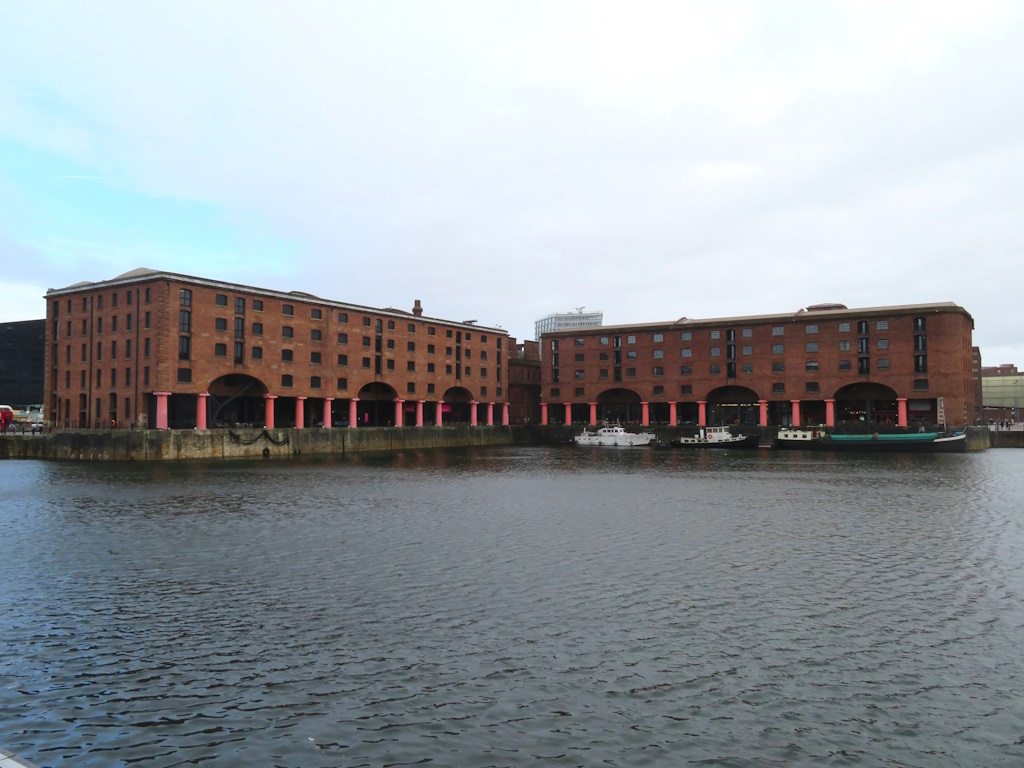
ITV™'s breakfast broadcast offering This Morning had home here for eight years from 1988, the golden age of Richard and Judy, no less.
They then decamped to London, where it was thought easier to get 'better' guests to appear. Better guests? Nobody was watching Richard and Judy for the guests. No, we were waiting for the weatherman to slip and fall off the floating island, splash!
Opened in 1846 by Albert of Prince Consort of Queen Victoria fame, his was the first visit by a member of the Royal Family to Liverpool.
A revolutionary ability to load and unload directly from and to the warehouses, or something, helped the docks to initially prosper. Bigger steamships that wouldn't fit, and then some wars, though, meant by the 1970s the berths were deserted, and the tidal river's polluted silt seeped in.
Now it's nearly all nosh and knick-knacks nicely linking up with museums of the Liverpool, Maritime, Beatles and British Music varieties. The Maritime and International Slavery Museum, however, looks to be closed and you'll need to wait until 2028 to be reminded of the important part played in how the city was built.
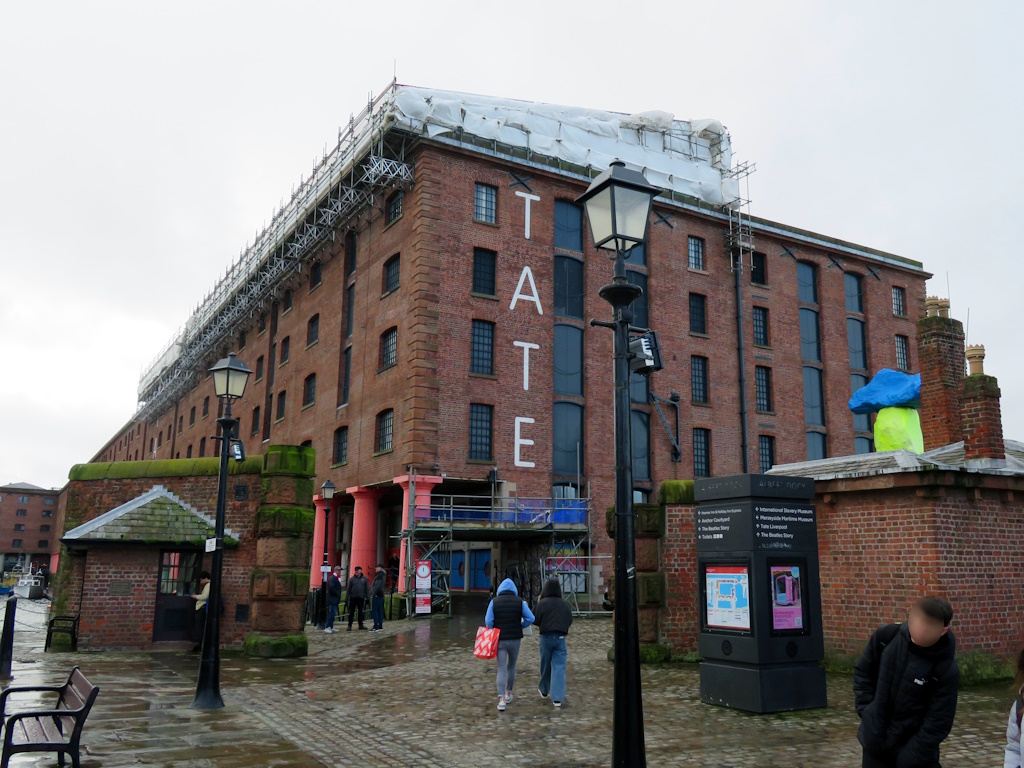
Major renovations, also, mean Tate Liverpool won't reopen until at least late 2025 so we'll have to find somewhere else with a wall to stare at and grumble 'I could do that!'
They're tapas mad in this town and Lunyalita are chucking chorizo in the traditional stew and calling it Catalan Scouse. They've another operation near the centre with a deli and kitchen shop, all cemented on their early success at food festivals. As for the Catalan Scouse? Just call it cazuela like everywhere else does man!
Everywhere else apart from Salt House Tapas, that is, where it might be missing but whose menu is equally moreish, and is mentioned to emphasise how tapas mad this town is.
Just up at Pier Head, more of the Mersey and we've heard there's a ferry across it? There is during peak hours, but for the rest of the day it doubles as a river cruise with Gerry and his Pacemakers on the tinny tannoy.
Highlights include the ventilation shaft of one of the Mersey tunnels and the largest brick warehouse in the world, whoo-hoo!
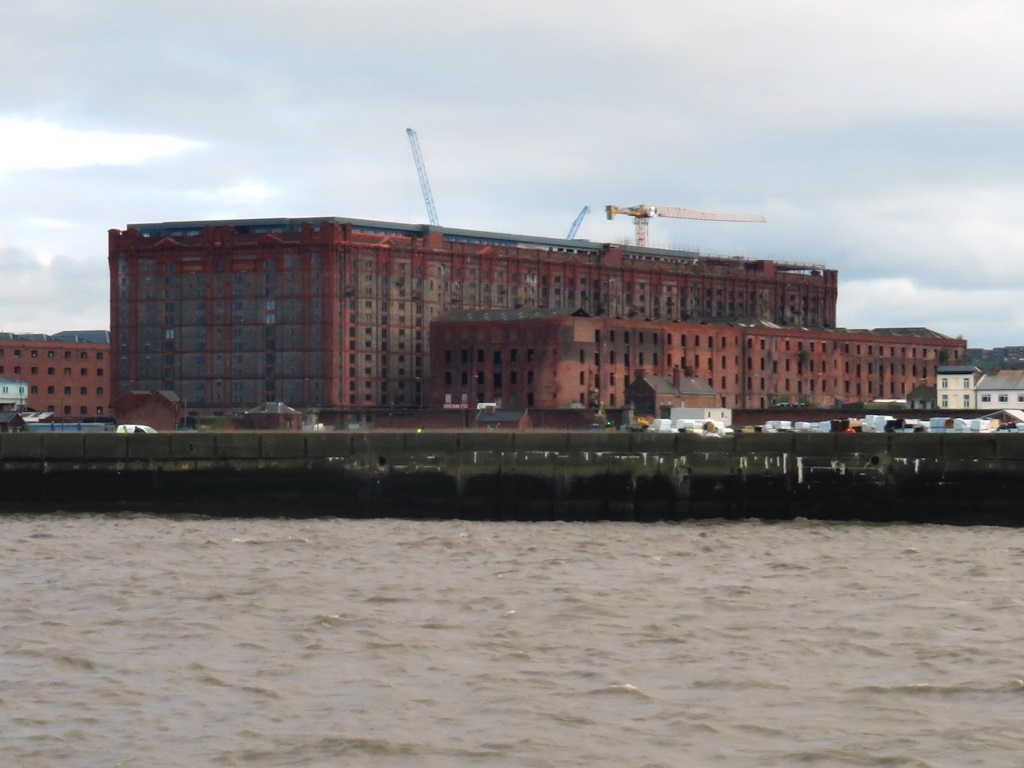
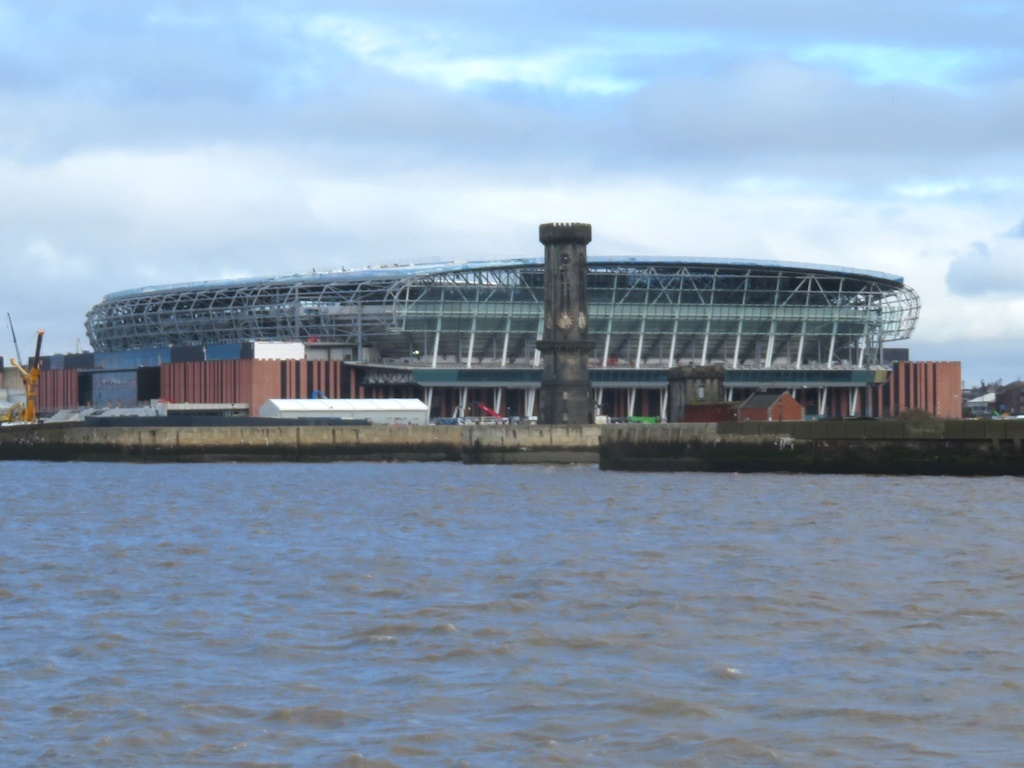
Now repurposed for the residential, this is roughly where Everton F.C. will be kicking off the 2025-26 season in a decidedly new stadium, but in a division yet to be decided. The warehouse was used for the storage of tobacco while Everton have just convinced David Moyes to back go.
Fans of Liverpool-based synth-popsters Orchestral Manoeuvres in the Dark, there's at least one Bob knows, will remember their largely unlistenable, fourth studio album Dazzle Ships. Dazzle whats?
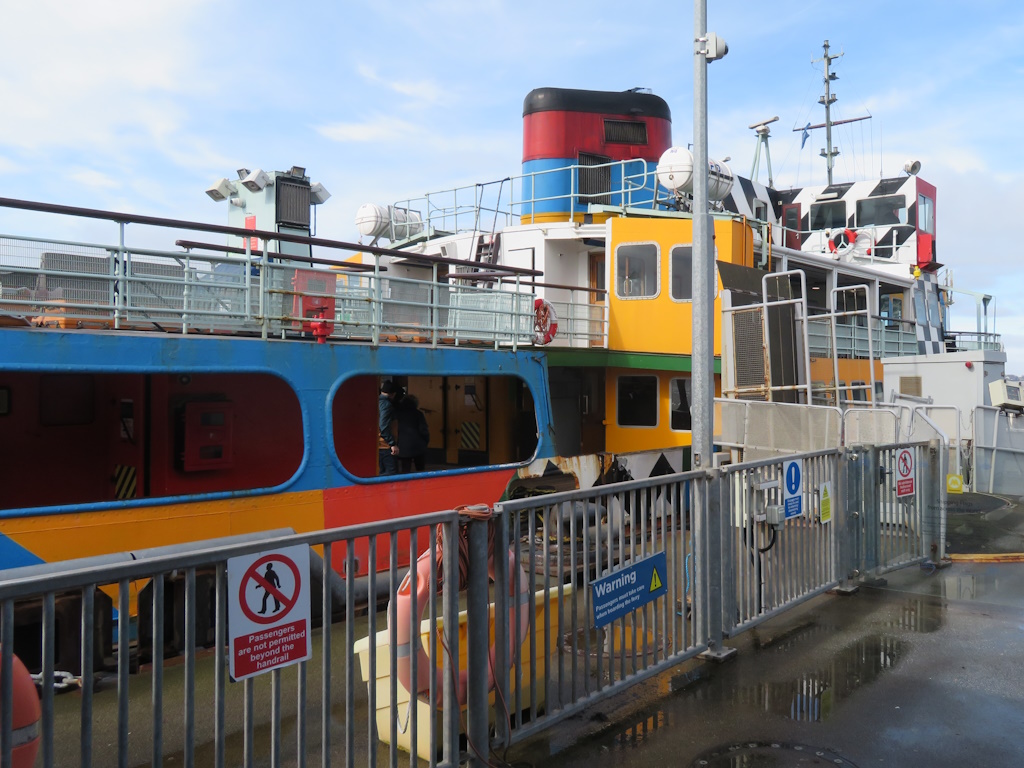
Something of these was already known, a form of World War I warship camouflage although the jarring, geometric colouring was designed more to deceive and distort than disguise.
The ferry has been given the treatment, and much of the wartime paint was applied in Liverpool's dry docks, so it's finally understood why the OMD association.
Most of that album, by the way, is best described as 'experimental', and some of it sounds like it's being played over the same tinny tannoy.
The cruise heads north to the rivermouth then soon loops back to afford views of the Wirral on the right. This geographical curiousity straddles Merseyside, Cheshire and also Wales and is the birthplace of Paul O'Grady, RIP, and Glenda Jackson, RIP, who are celebrated in paint in Birkenhead.
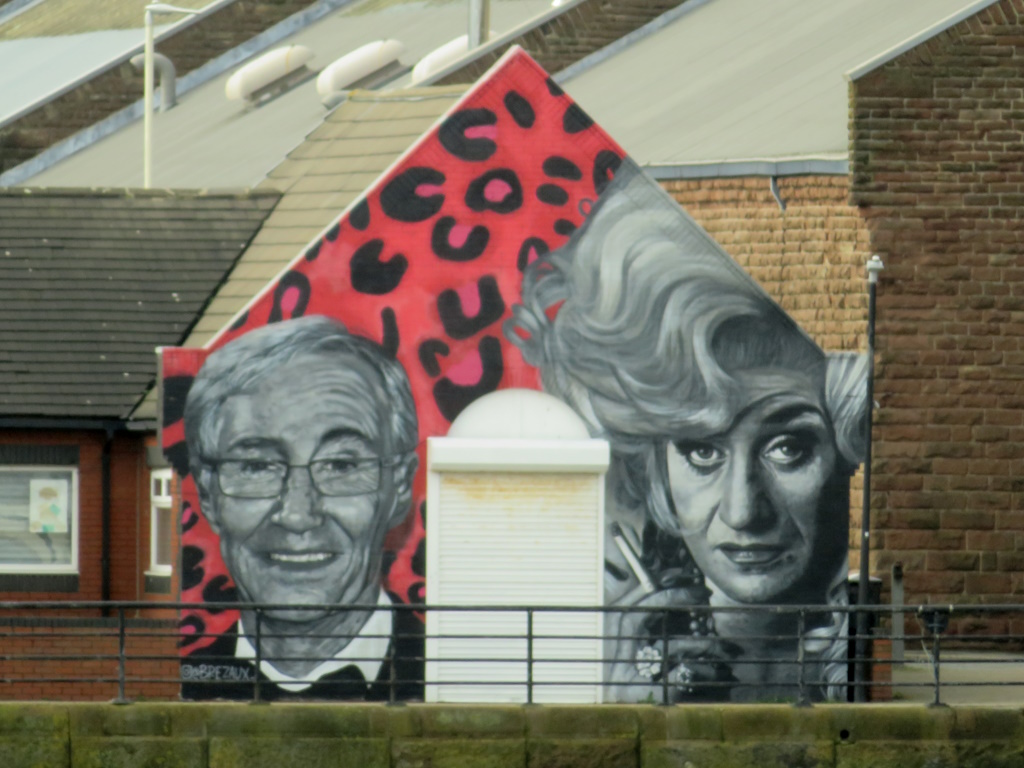
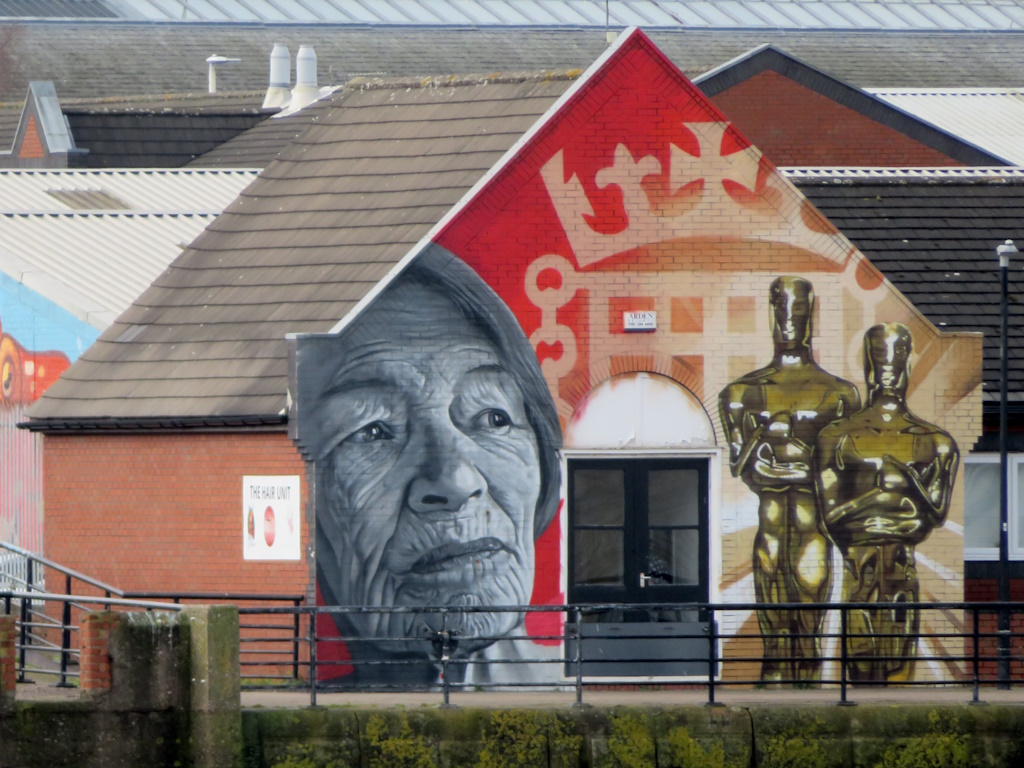
Birkenhead, by the way, is worth a visit, we're told. It has the largest Grade I listed Victorian square outside of London and the highest number of listed Georgian buildings outside of Bath.
Outside of? Doesn't that mean second? Yeah, we're getting a proper sense of that now. The Mersey is more than a kilometre but less than a mile wide, while the River Tyne is 200 metres at best.
Let's not even get started on the football, again.
Modern addition, but more on that in a minute, to the waterside and dedicated to everything Liverpool.
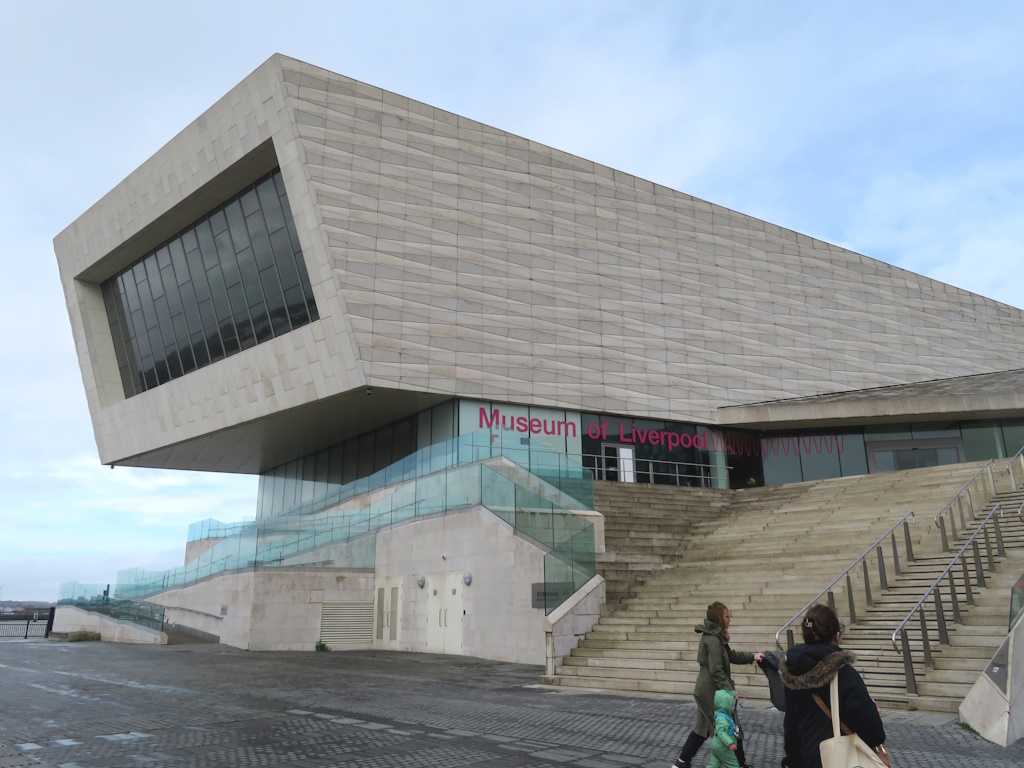
The extent of Liverpool's docks is revealed from the ferry and an electric, elevated railway once ran the five-mile length. Shuttling workers to hard, manual shifts, it was extended up to the, erm, 'seaside' at Seaforth, until it achieved the inevitable state of disrepair in the mid '50s.
This sort of thing is the right side of SlyBob's tracks as is a marvellous model of, and original carriage from, the 'Docker's Umbrella' or the Ovee ha! ha! ha! It claimed several first of its kinds but not the oldest, that one is down in fancy London and what's now a branch on the Northern Line. Yeah, see how that feels Liverpool!
A small, temporary Ken Dodd exhibition today is tempting visitors of a certain age to stump up for. Unlike one of his shows, though, it will take a lot less than five hours, and the rest, spanning the birth and death of Dodd in Knotty Ash so no, he didn't make that up.
Ken Dodd died in 2018. Did he? No, Doddy!
While we're on the subject, sort of, Seaforth is just south of Crosby, which is where the sand up to Southport starts when the docks run out. There's no brag of being the 'Mersey Riviera', the top of the Wirral claims that, but there's plenty of the golden stuff on show, especially when the tide's oot.
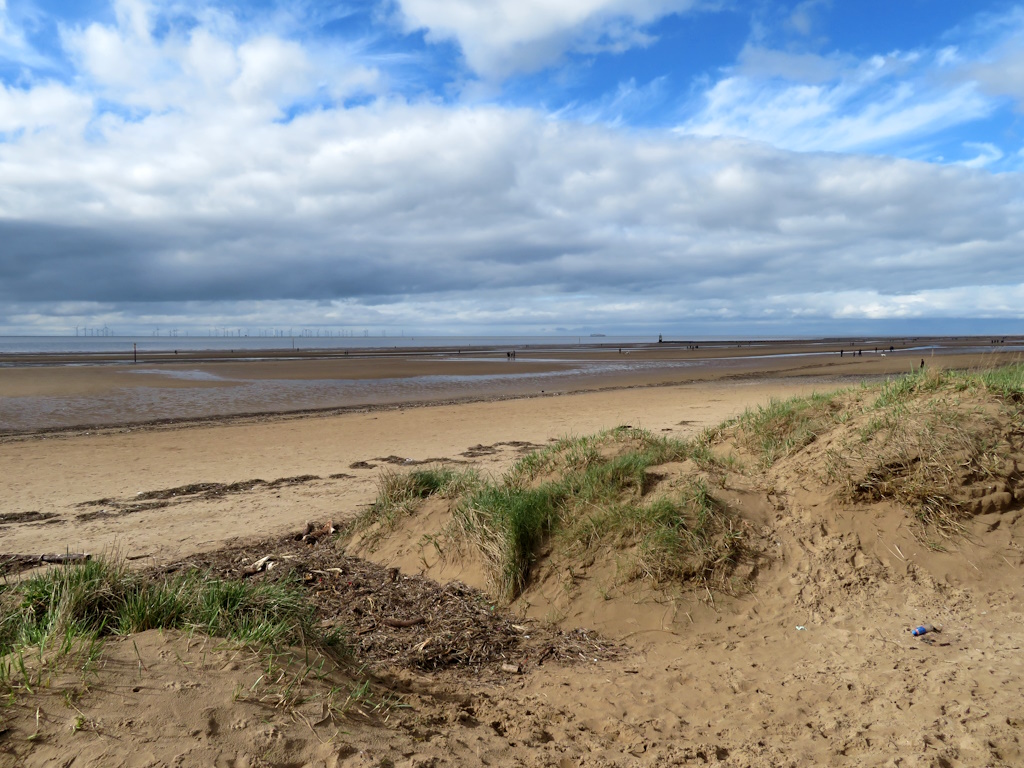
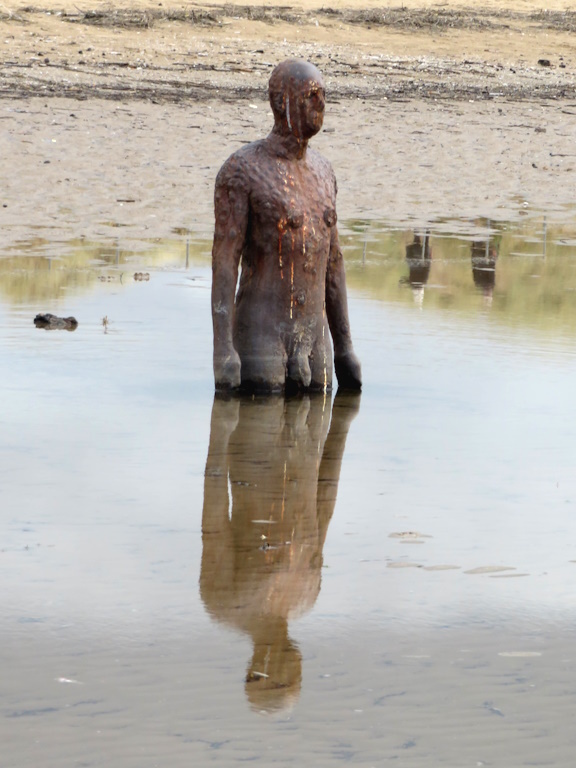
Where better, then, than to plant 100 cast-iron, life-size figures stretching almost a kilometre into the sea. Yes, Antony Gormley's Another Place, like you didn't know already, and where 'human life is tested against planetary time.'
Hmmm, we're not sure about that but what will be said is if one particular aspect hadn't been so generously cast, there would be at least 103 of them.
Meanwhile, back on dry land, the full architectural impact of the Three Graces is evident. This trio of turn-of-the-20th-century buildings include the Royal Liver and the famous birds atop.
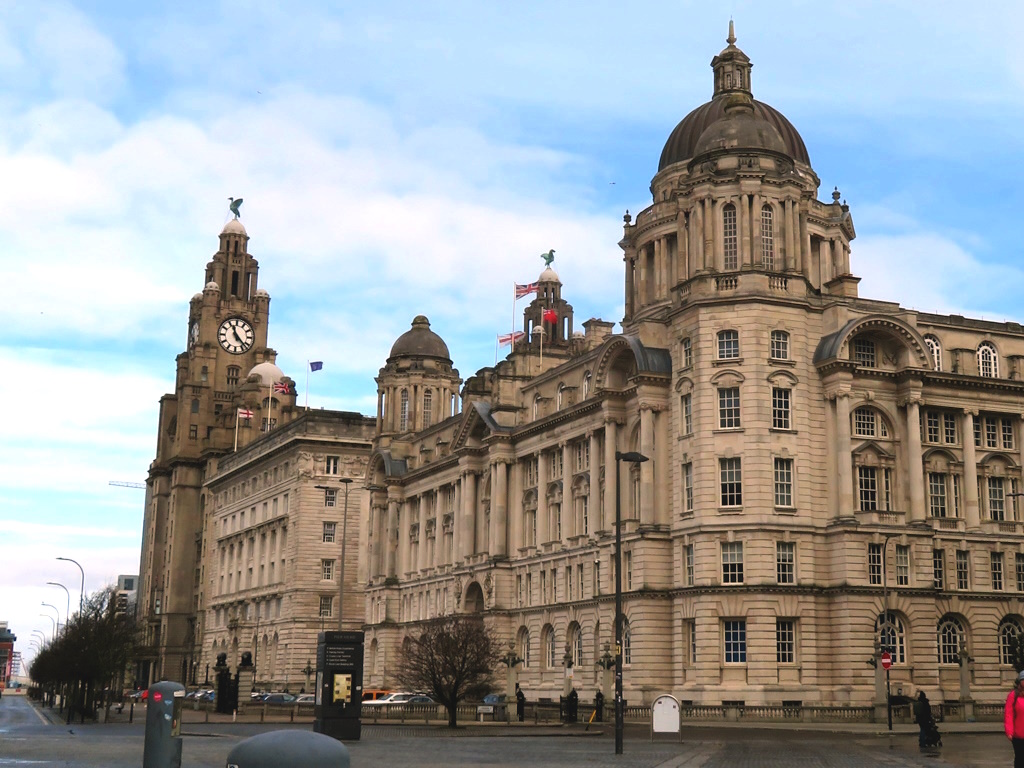
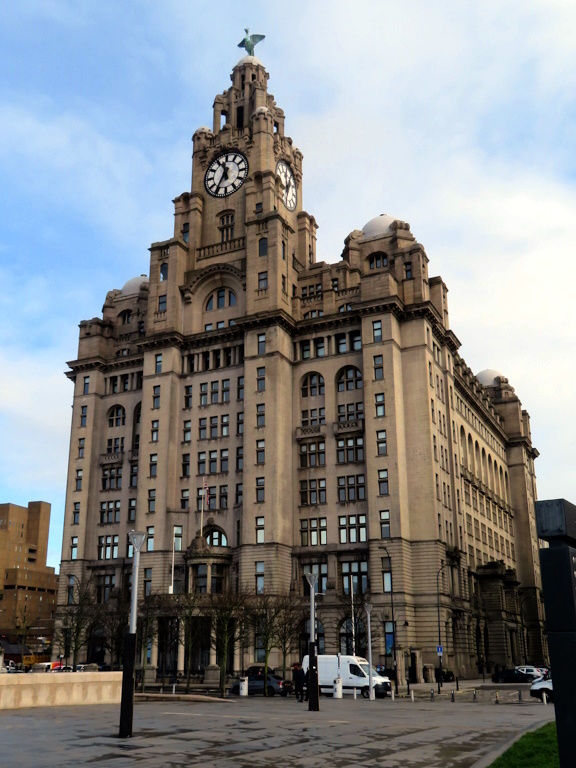
Based on mythical, griffin-like creatures said to have stalked the shoreline after dark, the design is by a German competition winner. Legend has it should they ever fly away, Liverpool will crumble although that's unlikely.
They're chained down, you see, but more for health and safety reasons and not because of a reputation of scousers stealing things from roofs.
Cormorants are cited as the common equivalent, twitchy sorts, however, might argue a shoebill? Either way, that's Liver as in laver, a type of seaweed of which each has a strip of betwixt their beaks.
The Three Graces were instrumental in the awarding of UNESCO World Heritage Site status to Liverpool Maritime Mercantile City in 2004. Then Liverpool went and did this.
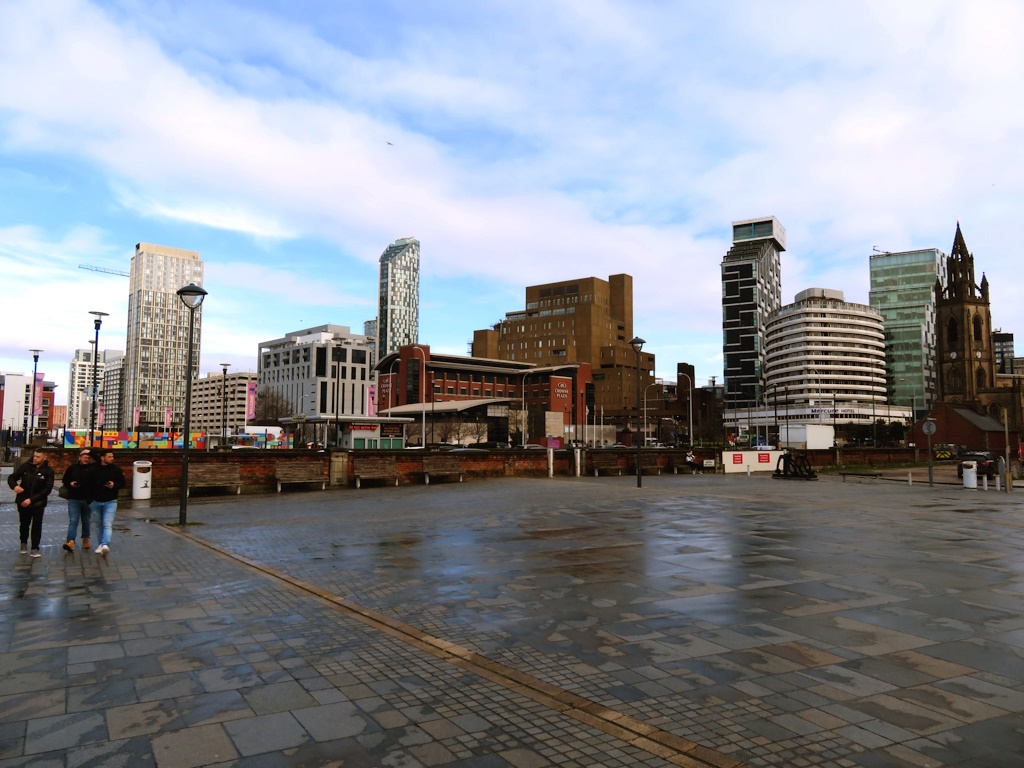
A tipping point appears to be the approval of Everton F.C.'s new ground and the ranking was revoked in 2021. It was only the third time this had ever happened and Liverpool is now twinned with Oman and Dresden, not that it was totally unexpected.
Threatening dialogue over several years around developments not 'in keeping with' suggests a two-fingered response to UNESCO by the fat cats and pen pushers at City Hall who saw this all as progress, probably.
It would normally be filed in the could-just-about-be-anywhere category but SlyBob argue it's not, yeah, take that UNESCO! It's recognisably de rigueur, for sure, but cock your neck and there's still plenty that's not and, let's face it, nobody is planning a weekend in Liverpool based on a UNESCO recommendation, eh?
That looks to be the riverside exhausted, so it's time to hop on a bus and not one stopping at Penny Lane or Strawberry Field or even George Harrison's old house. If you've been paying attention then you'll see them pavements are fairly wet meaning somewhere indoors needs to be sought so how about a couple of big churches?
Liverpool Metropolitan Cathedral is England's largest Catholic cathedral, quite some claim, and 'Paddy's Wigwam' ha! ha! ha! is the result of another competition winner. It wouldn't be fully realised until 1967, hence the space-age appearance, but this wasn't always the intention.
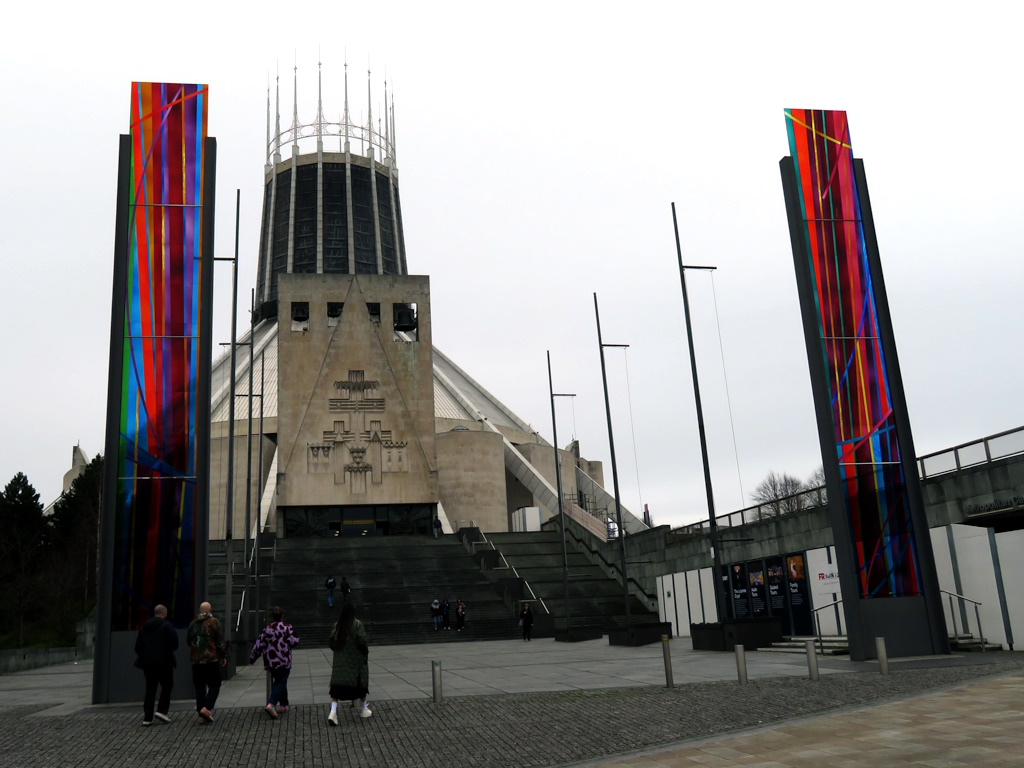
Famed bricklayer Sir Edwin Lutyens submitted plans in the 1930s for something far more traditional that would have made for the second-largest church in the, get this, world!
Construction delays and depleted funds thanks to World War II meant the proposal was scrapped although they managed to finish off his elaborate crypt. Not much more of it is known other than it hosts an annual beer festival, hic!, and where better to get out of one's skull than down in a crypt, eh?
As for inside, someone is going very heavy on the organ and Bob's flimsy snaps don't do the lighting justice so this has been borrowed from elsewhere - thanks William .
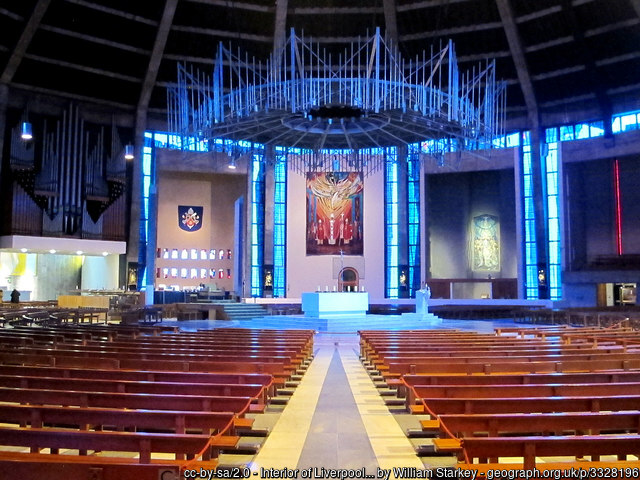
Now, SlyBob aren't great fans of medieval battles, but do like a castle. In a similar vein, we're genuinely not that interested in what goes on in these places, but strangely drawn to what can only be assumed to be the reverential interiors, so while we're here...
The opposition is catered for down the road at the largest Anglican cathedral in the, get this, world, which really just means the largest one in England, really.
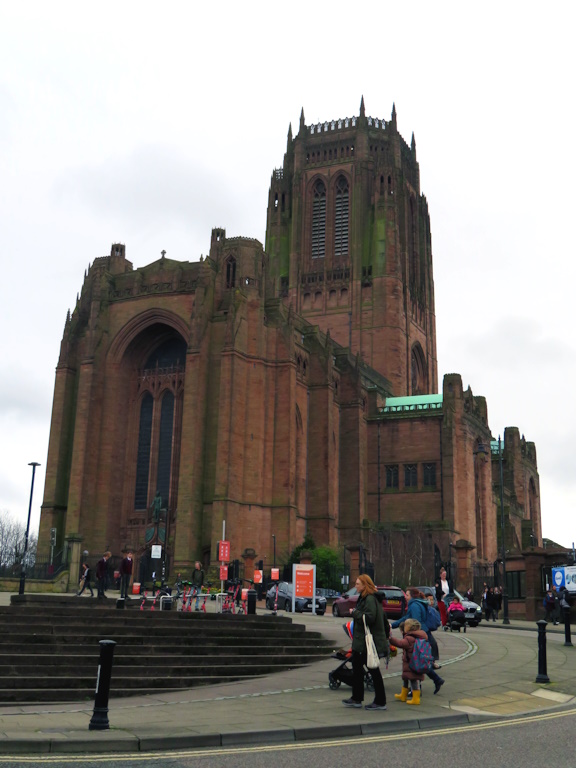
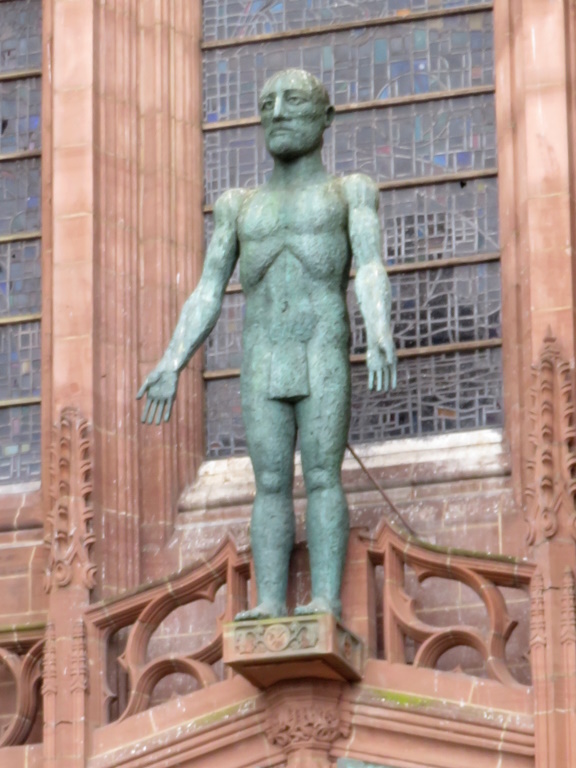
This more familiar form wouldn't fully open for business until 1978 although some of the finishing touches are more modern. That makes for quite a gap from the initial 1903 design submitted by, yes, yet another competition winner.
One of the guides is stereotypically chatty and, on clocking the accents, sings the praises of not just here but South Shields, seriously. He's not so well informed, however, to know the 1,700 square metres of stained glass were designed by?
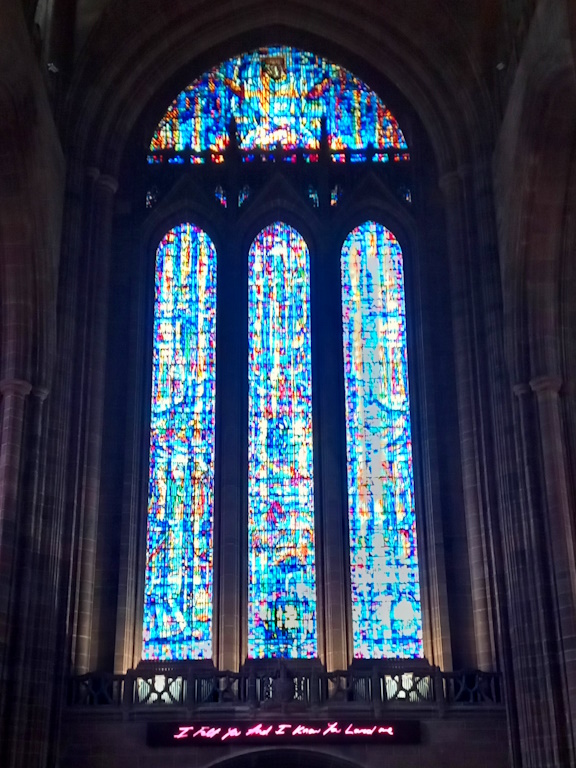
No, it wasn't a kid from Blue Peter™, but neither were any of the other competition winners, neither. These were professional entries by qualified individuals and that's a shame. We hear they're planning a new £60 million cruise liner terminal and Bob would love to have a go at that!
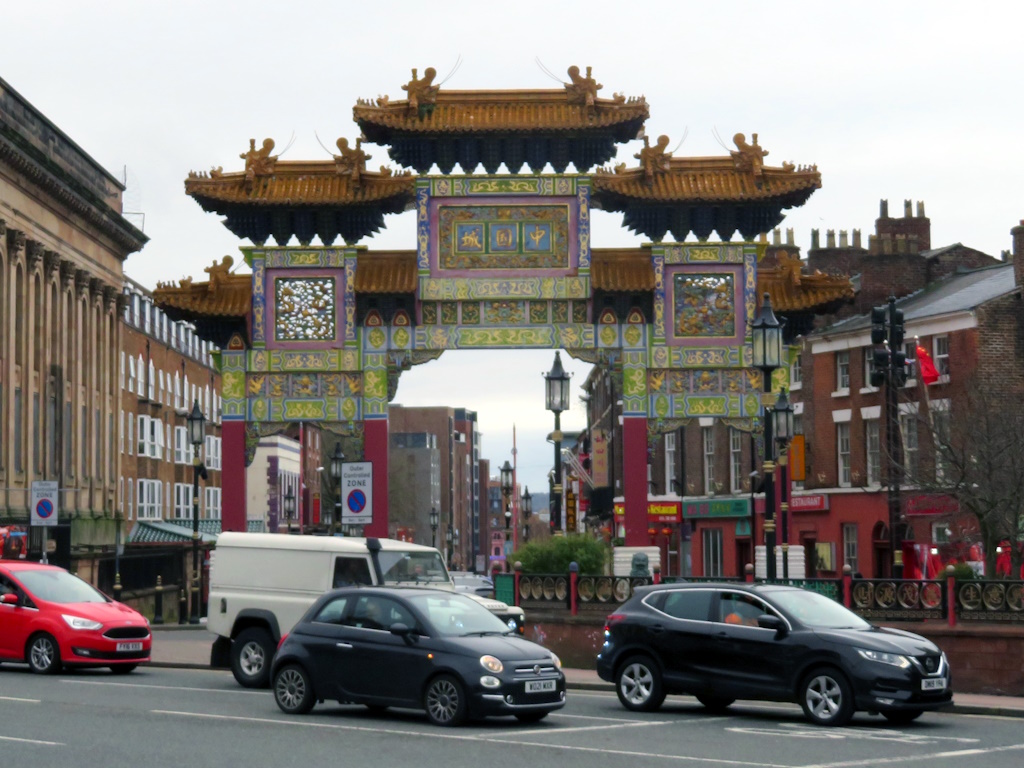
With the rain relenting, it's not too far a trot to the centre passing the colourful entrance gate to Liverpool's China Town on the way.
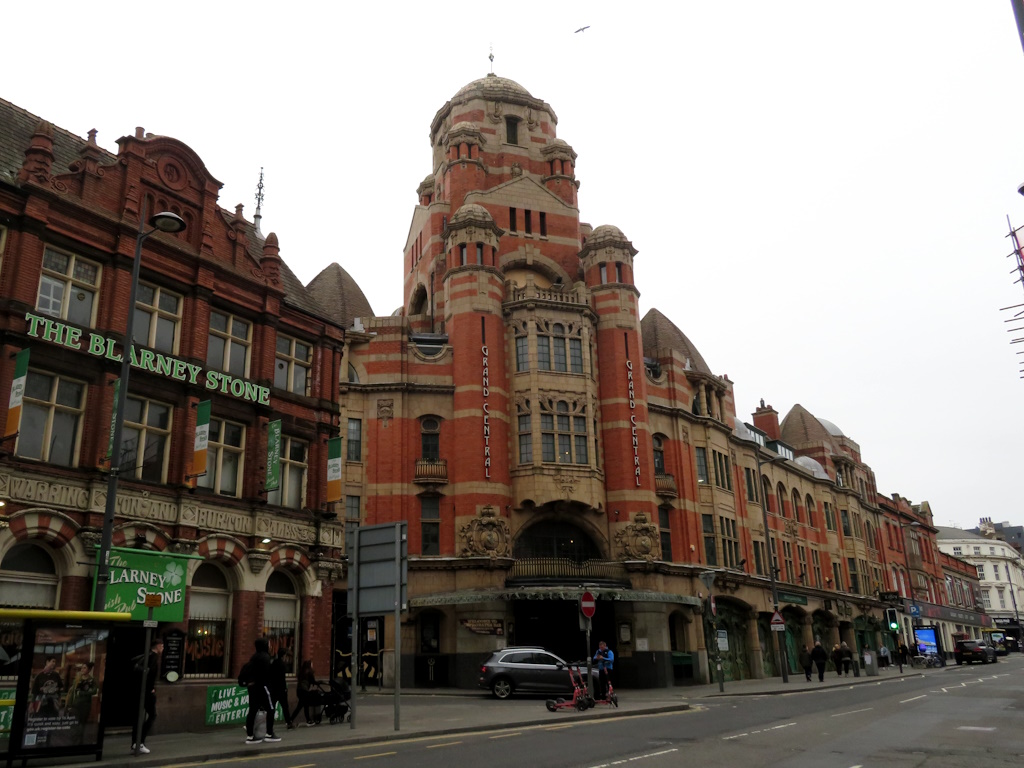
There's a right eye catcher along Renshaw Street, and Grand Central Hall has functioned as some form of fleshpot since 1905.
Following stints as a take your pick from any combination of cinema\performance venue\nightclub\boutique shopping\street food supplier, it is now branded as the 'Irish Village'. Three-quarters of Liverpool's population can claim a direct, Irish family connection, they say, and this is where they all live.
That's a joke, hey we're just trying to have a bit craic here, but there are four Irish-themed pubs occupying the ample space. Nelly Foley has a double presence in the city although she's not thought to be the same Nelly Foley who lectures in medicine in Melbourne.
They seem to be back in fashion and Liverpool looks to have a higher-than-average number of such establishments pushing stewed lamb, stout, live music and the promise of some 'mighty' craic.
Maybe we've been going to the wrong places but in our experience it's not so much mighty more merely convivial.
Ropewalks is the area where Liverpool's bohos hang, and things get increasingly hipster heading south from Bold Street. That includes Duke Street's Food & Drink Market, and the Italian Club Bakery whose sweetmeats are straight out of a Masterchef™-like kitchen.
They also serve, and here's a claim, the best coffee ever - Altri due cappuccini, per favore although the loyalty card won't be any use, we're off tomorrow, sorry.
By the time you arrive down at the Baltic Triangle, you'll have grown a foot-long beard, and the hazy pales and wood-fired pizzas never tasted so good in a repurposed warehouse.
Things take a more cultural twist near Liverpool Lime Street train station, inexplicably not shown, where they got the railway early. That was 1836 early and makes for another gold medal claim.
The oldest, still-operating, mainline terminus in the world and SlyBob can't think of an older, no-longer-operating, branchline station that isn't a terminus, can you?
The Victorian vibe is preserved as it is next door at the former North Western Hotel. Radisson™ now provide the lodgings and, this being the 21st century, of course it's got a Wetherspoon™s in it!
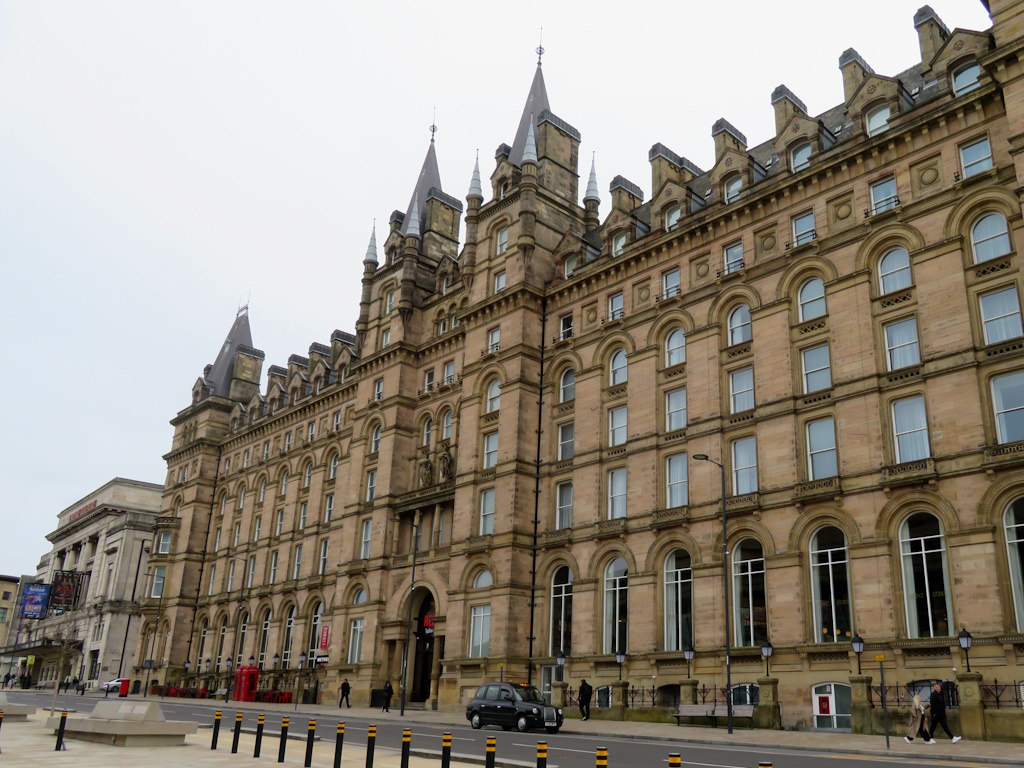
Sneaking in on the left is Liverpool's famed Empire Theatre and you name 'em and they'll have played there. From Garland and Sinatra through to a little-known, four-piece combo called... The Rolling Stones!
OK, so there were five of them, but that attempt at a joke leads into the first, non-fleeting mention of the Fab Four, like enough common knowledge hasn't already been covered?
Only 5,000 applicants from an estimated 40,000 secured tickets for a couple of performances on their sold-out, 1965 UK tour and the last time the band would play live in Liverpool.
A maturing audience weren't quite as hysterical as before, but that could be down to a heavy police presence, something McCartney wasn't happy with and probably because of what he was now stashing backstage, right man?
Directly opposite the old North Western is Liverpool's architectural jewel, the classic Neoclassical St. George's Hall. Designed by, and even we're beginning to doubt it now, a competition winner for a multi-functioning public venue, it opened in 1854 and it looks like this from the front.
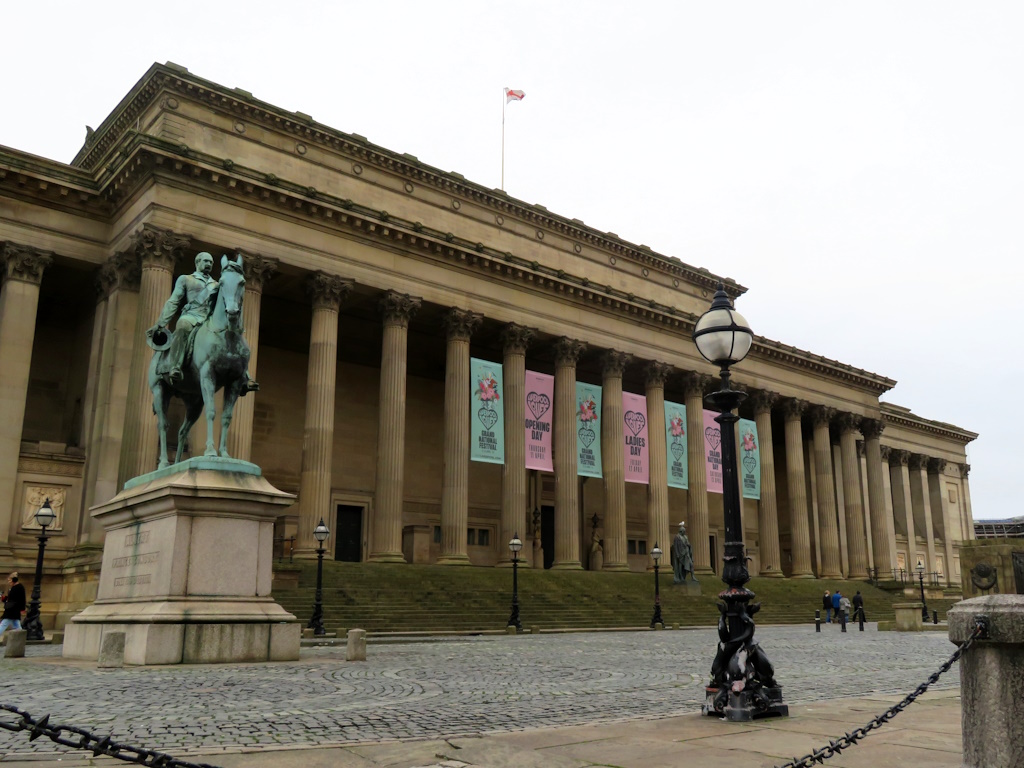
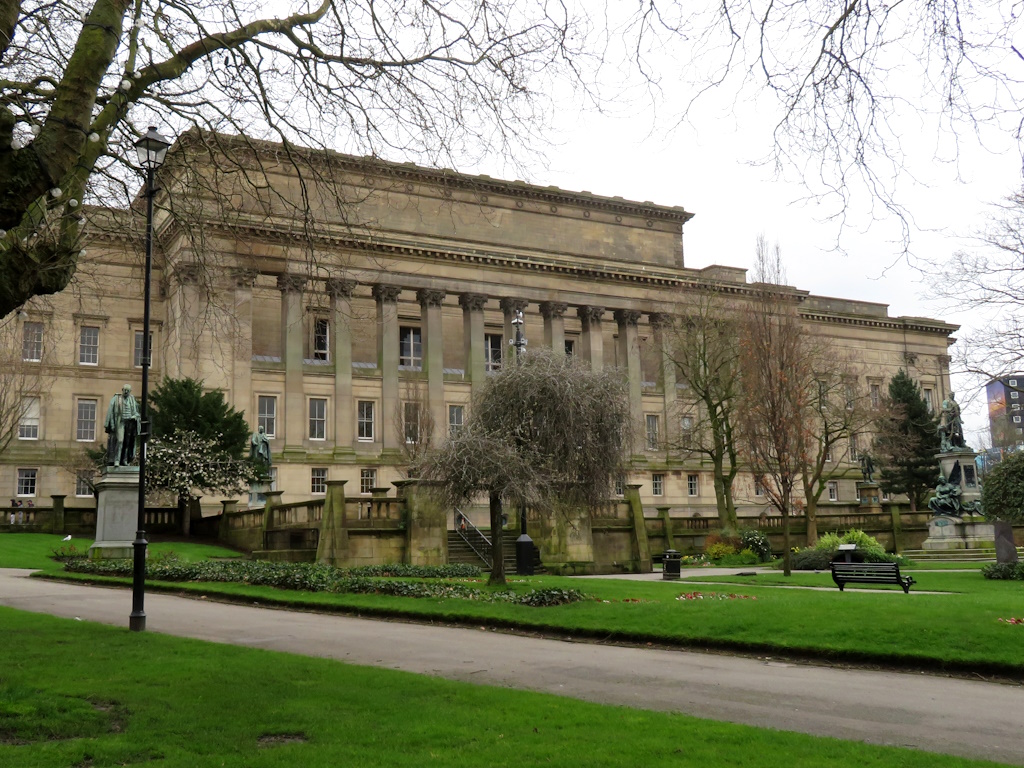
And it looks like this from the back.
It has hosted numerous events over the years including a rally that turned into a riot and the draw for the 2023 Eurovision™ Song Contest. The pleasant St. John's gardens behind provide a rare area of shrubbery and just below you'll find the Hillsborough Monument Memorial.
Family and friends of the people who died on that awful day in 1989 funded the embossed, bronze cylinder with all 96 names displayed and it's a powerful piece serving its purpose to always remind.
There are two structures of similar age and appearance next to St. George's. The Walker Art Gallery is the city's best known and doubles as the national gallery of the North, no less. Many of the big doodlers hang in here while next door's World Museum is more antiquities and natural history from around the globe.
Both buildings were gifted by benefactors and, get this, neither was designed by no crummy competition winners, neither.
That leaves the rest of the afternoon for standard city centre bumbling, but is there anything left to see? Eeeh! TV's Adelphi Hotel and eeeh! A road sign to the A5409, which heads towards West Derby, from where just off Deysbrook Lane they filmed Brookside.
Of course there's something left to see, the Cavern Club, of course. This famous venue, the 'birthplace' of the Beatles, opened its doors in... 1984 and that's because of British Rail.
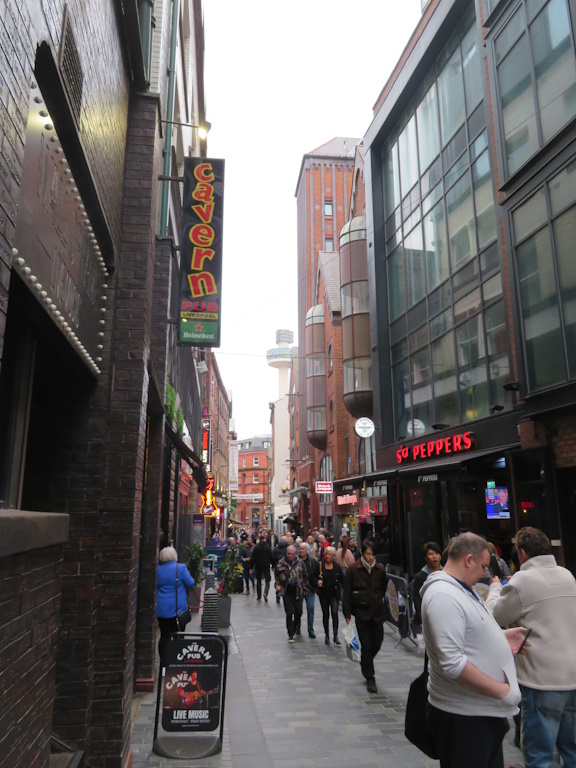
Live music is on the rise nationwide, even we have noticed that, but Liverpool has always been a keen player so take your pick along Mathew (one 't') Street or even elsewhere.
A pecking order on the circuit means the 3 PM slot is occupied by those starting out whose singular, strumming style isn't quite yet desyncopated from the singing. Not that the audience are aware, them Oasis and Killers bangers are guaranteed to get an afternoon singalong started.
It's cover versions all the way until 9 PM when the semi and professional performers might sneak in some original material.
The daytime drinkers will have departed by that point, a trend encouraged by bottomless-brunch branding in bars, the outcome of which is being back at home, bladdered, with a bhuna on the knee, just in time for Casualty.
Everybody, yes everybody, who lives in Liverpool has an auntie who saw the Beatles perform at the Cavern in the early '60s, some of them not born yet. Superstardom came-a-callin' and the local lads would never be seen again, well, not until they played the Empire in 1965, see above.
The post-Beatles years of the Cavern weren't selling out quite so quickly, and when a new underground railway was proposed, British Rail acquired the site for a ventilation shaft in 1973.
Warehouses were demolished and the basement venue filled in forcing the Cavern over the road to be soon rebranded as Eric's, which spawned the next generation of Merseyside musicians, OMD included.
When John Lennon was murdered in New York in 1980, plans were drawn to reopen the original location to an increasing number of fans-come-pilgrims, many now visiting from overseas. The problem was, Mathew (one 't') Street is essentially a pedestrianised and otherwise insignificant alley so excavation proved, let's say, troublesome.
No matter, just retrieve as much of what remained below the pavement as possible and reconstruct it brick-by-brick a few doors down enabling a steady, souvenir-based revenue stream.
It's not all about the Beatles on Mathew (one 't') Street although it mostly is. Eric's is still there if you're too young for them and Echo and the Bunnymen, or even OMD, get you excited and there's at least one Bob knows, remember?
Look out for the pretty good statue of Cilla Black, not shown, but it's not so much Step Inside Love more Step Outside Love since she stands where the fire exit of the Cavern Club was, 'tis true.
To complete this box-ticking exercise, some even better bronze in the form of the foursome can be found near Pier Head. It would have been mentioned earlier but you'll have to wait 20 minutes until the young Japanese girls finish their photographs. We get you're on holiday but are 500 not enough, seriously? They won't talk back, you know that?
It's surely time to head back to the Hilton™, oooh look at you, for a nap, but unlike Manchester or Leeds, not everything you pass that wasn't bombed or isn't modern shopping is built from the redbrick of the industrial era.
There's a lot of Portland stone on show - thanks Stephen - and if you squint and you don't look up, this could be downtown, 1920's New York?
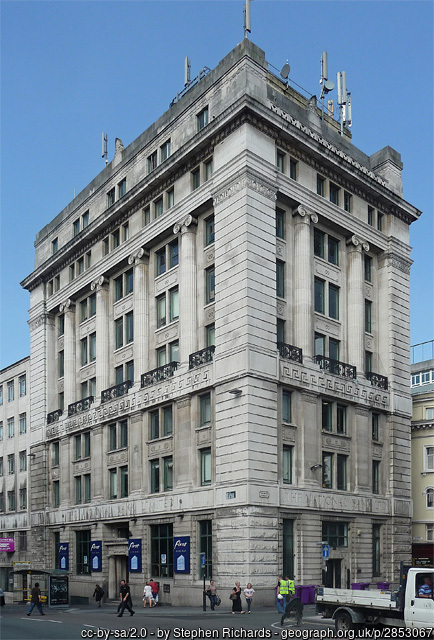
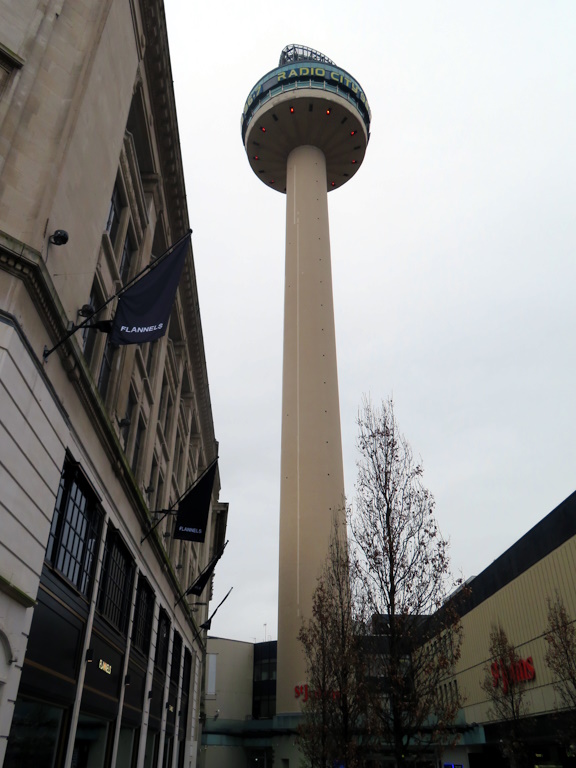
If you stop squinting and you do look up, however, you'll likely be like WHOA! Who put this here?
Everyone knows of the one in fancy London but fewer are familiar with Birmingham's BT™ Tower, and SlyBob first realised they both suffered from the wobblies going up something similar in Calgary, oooh look at you again. Liverpool has a version as well? Since when?
Turns out that St. John's Beacon, or the Radio City Tower if you'd rather, has been here as of 1969 and they'll still let you in and up it for £8 quid, no thanks.
A divisive structure, although attempts to convince what many see as an eyesore to be an integral part of Liverpool's identity have been less than successful. A Buck Rogers-themed restaurant in the '80s might have worked if it was now the 25th century but then, get this, a zip wire down to the roof of the central library.
They were a bunch of crackpots back in the '80s, eh? Except the proposed zip wire was as recent as 2020 and was only abandoned after the mayor intervened. That will surely change with populist politics on the rise when a new incumbent is ushered in to give the people what they think they want, right?
The Beacon was definitely drawn by a kid in a Blue Peter™ competition, definitely, but they had trouble keeping the dinosaur toppling off the top and attaching the space lasers on the side that fired at folk on the ground.
Hey, that's what a six-year-old Bob would have sketched and that reminds me. Get the crayons out Sly, there's a new cruise terminal to design, remember?
Phew! That's been quite an action-packed couple of days and we need to sit under a tree with some whistling wildlife for company to relax. The best option is to head two-and-a-bit miles south and east of the centre to Sefton Park, Liverpool's prime piece of public space.
Highlights include more water than expected and the Palm House, a restoration of previously rusty Victoriana, inside of which you can grab a frothy coffee and pretend you're in the Bahamas.
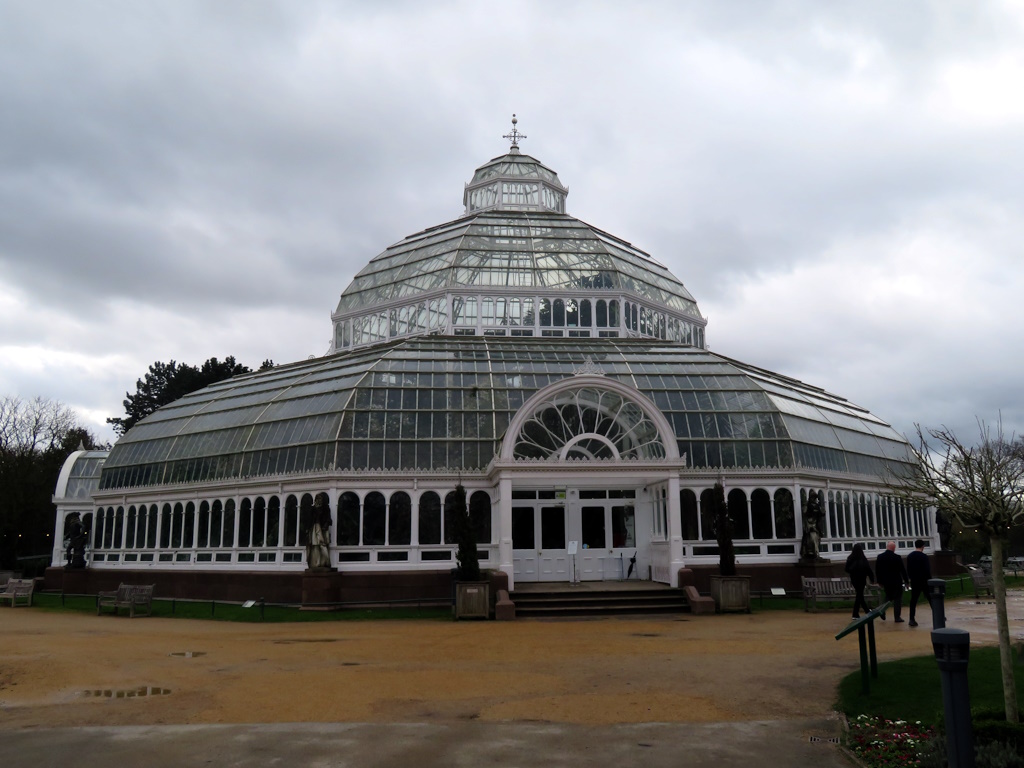
There are 235 acres, they say, which is just over 100 new Everton football grounds or is it 400? Yes, I always have to double check what an acre is and it's definitely just over 100 football pitches with ample room for throw-ins and corners.
The layout was planned by, here we go again, a competition winner, this one French, and it all opened in 1872 for those able to escape the suffocating air of the city. Many are doing that, alright, despite a dull Sunday morning although the residents of the swanky suburb are likely irritated by them clogging up the sidestreets.
We don't just mean the cars, no, a lot of these pedestrians might simply be lost looking for the sign for Penny Lane?
It's round here somewhere.